
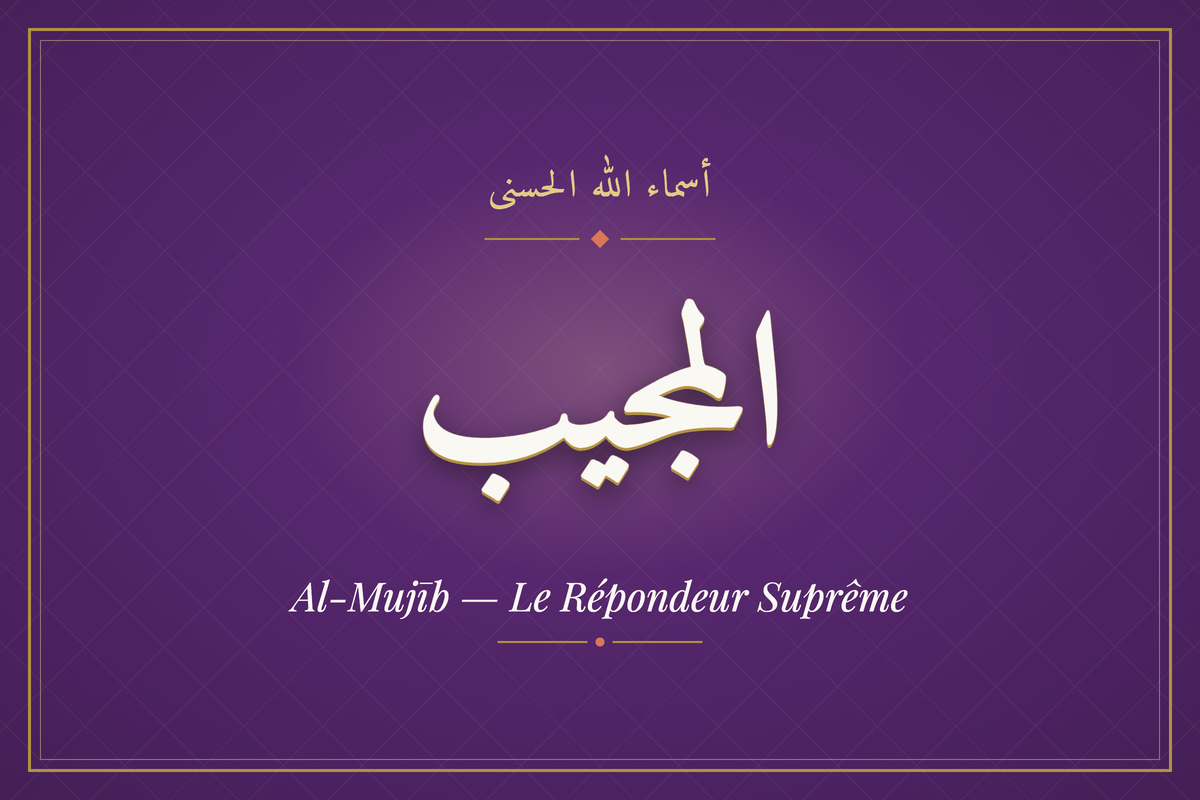
Al-Mujīb (المُجِيب), "The One Who Responds," "The One Who Answers Supplications," is one of the most beautiful Names of Allah. It carries one of the sweetest promises of revelation: no sincere supplication is lost. The servant calls — and the One who possesses the heavens and the earth responds, in His manner, in His time, always for the good of the one who supplicates.
What does Al-Mujīb mean?
The name Al-Mujīb comes from the Arabic root jīm-wāw-bā' (ج و ب), which expresses the response and the act of answering a call. Applied to Allah, this Name designates:
- The One who hears and answers: no invocation goes unheeded; Allah answers whoever calls upon Him, believer or sinner, in ease or in hardship.
- The One who anticipates the request: He provides for the needs of His creatures before they even express them — the response of His generosity often precedes the question.
- The One who answers with wisdom: His response takes the most beneficial form, which is not always the expected one, for He knows and we do not know.
Al-Mujīb in the Quran
The Prophet Sālih said to his people:
إِنَّ رَبِّي قَرِيبٌ مُّجِيبٌ
"Ask Him for forgiveness, then turn to Him in repentance. My Lord is indeed Near and He responds (Qarībun Mujīb)." (Surah Hūd, 11:61)
And Allah Himself makes this promise:
وَإِذَا سَأَلَكَ عِبَادِي عَنِّي فَإِنِّي قَرِيبٌ ۖ أُجِيبُ دَعْوَةَ الدَّاعِ إِذَا دَعَانِ
"And when My servants ask you about Me, then I am indeed near: I respond to the call of the one who supplicates to Me when he supplicates to Me." (Surah Al-Baqara, 2:186)
The Quran further asks: "Is it not He who responds to the distressed when they call upon Him, and who removes the harm?" (Surah An-Naml, 27:62). Note the constant theme: proximity. Al-Mujīb requires neither intermediary nor appointment — He is near and He responds.
How Does Allah Respond?
The Prophet ﷺ taught that no supplication free from sin and severing of ties is ever lost: Allah grants the servant what he has asked for, or turns away from him an equivalent harm, or reserves the reward for him in the Hereafter. (reported by Ahmad)
The response is therefore certain; only its form belongs to divine wisdom. What the servant perceives as silence is often a protection — or a treasure deferred that he will discover on the Day when he would wish that none of his supplications had been answered in this life.

Living with Al-Mujīb Daily
1. Invoke with certainty, without impatience
The Prophet ﷺ warned: supplication is answered "as long as the servant does not grow impatient by saying: I have supplicated and I have not been answered" (reported by Al-Bukhārī and Muslim). Living with Al-Mujīb means asking with conviction, persevering, and never closing the door of du'ā'.
2. Seize the moments of answering
The last third of the night, between the adhān and the iqāma, in prostration, on Friday, in the rain, while traveling: the Sunna indicates moments when the doors open more widely. The believer organizes his life of supplication as one organizes one's most important appointments.
3. Answer Allah yourself
Verse 2:186 continues: "Let them respond to My call and believe in Me." Answering is a reciprocal relationship: whoever wants Allah to answer his calls begins by answering Allah's call — prayer, obedience, and lawfulness in his food and earnings.
Invocation with the Name Al-Mujīb
Allah says: "To Allah belong the most beautiful Names. Call upon Him by these Names" (Surah Al-A'rāf, 7:180). One can say: "O Mujīb, You who answers the distressed when he calls upon You, I entrust to You this need that You know better than I do: answer me in the way You know to be best, and make me a servant who responds to Your call."

Frequently Asked Questions about Al-Mujīb
Why do some invocations seem to go unanswered?
The response is promised, but its form belongs to divine wisdom: granting the request, averting an equivalent harm, or reserving a reward for the Hereafter (reported by Ahmad). Added to this are conditions: lawful sustenance, presence of the heart, absence of impatience.
What is the difference between Al-Mujīb and As-Samī'?
As-Samī' is the Hearer: He hears every word, secret or proclaimed; Al-Mujīb is He Who, having heard, responds. Hearing is universal, the response is an additional gift of His mercy.
What are the best times to invoke?
The last third of the night, prostration ("the servant is closest to his Lord when he is prostrate" — reported by Muslim), between the adhān and the iqāma, and the day of Friday. But Al-Mujīb responds at all times to whoever calls upon Him sincerely.
📚 Continue your reading of the 99 Names
−5 % off the entire library with code BLOG5
Valid on the entire site, no minimum purchase — our thanks to blog readers.
Discover our books on the Names of Allah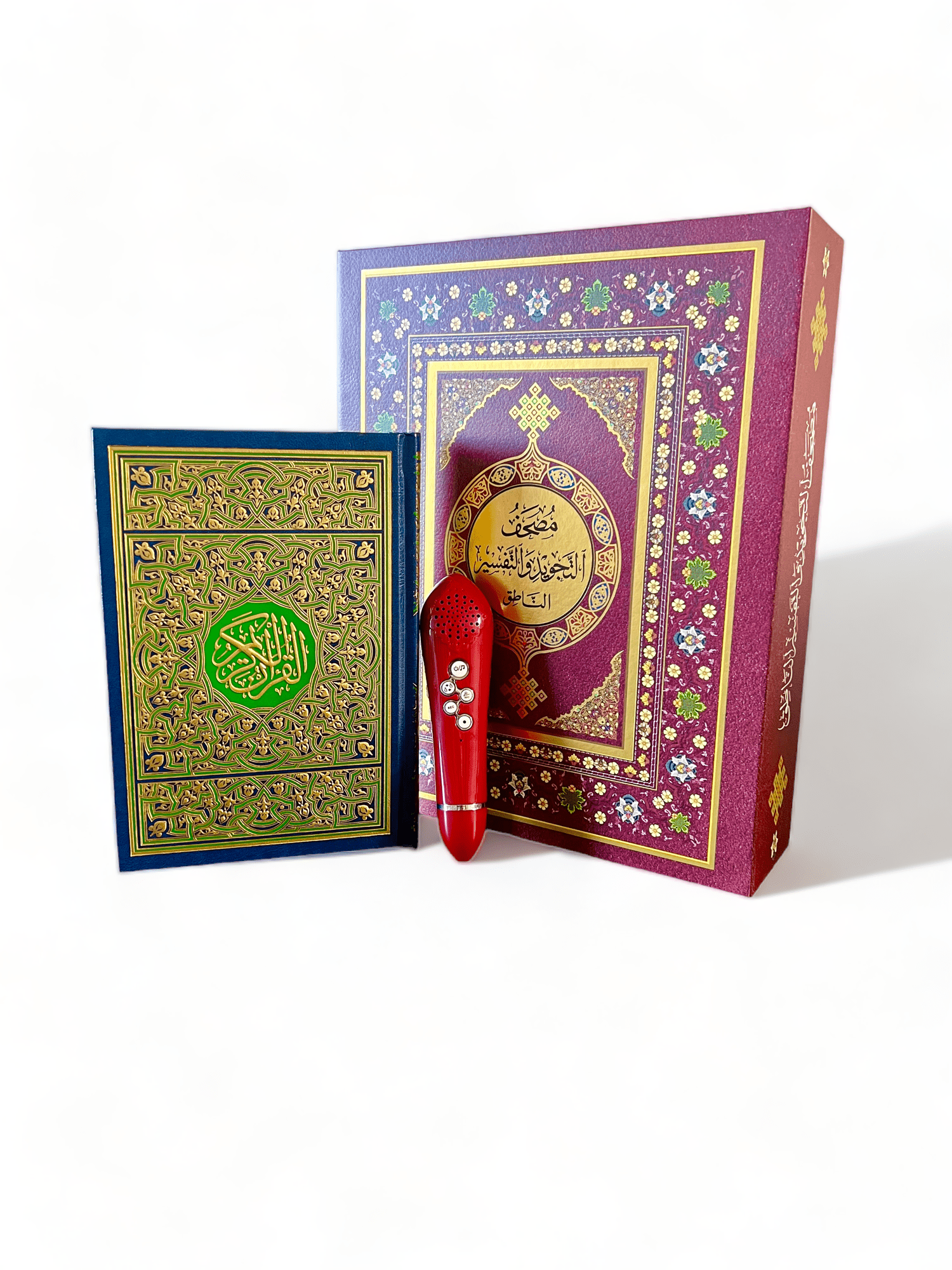
1 comment
Fane Adama
Vraiment 👍 je suis d’accord